

Blogs
Trap Primer Plumbing: Basements & Utility Rooms

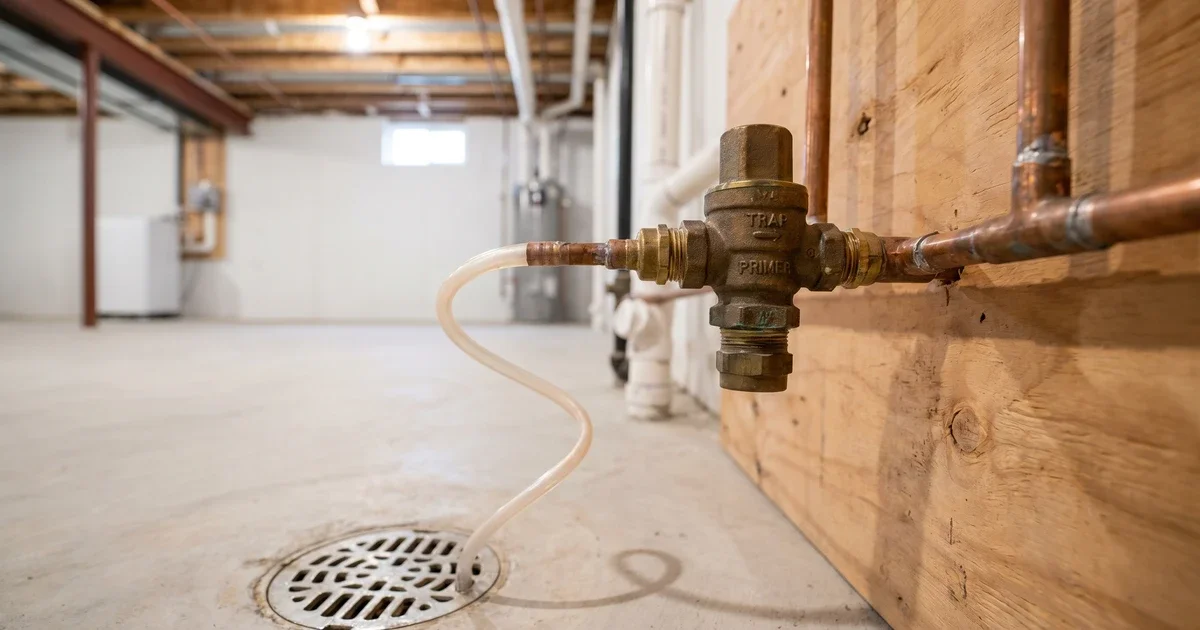
Have you ever walked into a basement or utility room and noticed an unpleasant sewer-like odour with no obvious source? The culprit is often a dry drain trap, and the solution is a device most homeowners have never heard of: the trap primer.
What Is A P-Trap And Why Does It Dry Out?
Every plumbing fixture has a trap: the U-shaped bend in the pipe that holds water and blocks sewer gases. The problem arises with floor drains in areas that receive infrequent use, where the water in the trap evaporates and the seal is lost.
What Is A Trap Primer And How Does It Work?
A trap primer automatically supplies a small amount of water to a floor drain trap at regular intervals, ensuring the water seal never evaporates completely. The most common type connects to the potable water supply and is triggered by pressure drops when other fixtures are used.
Where Is Trap Primer Plumbing Required?
Plumbing codes in Canada require trap primer plumbing for floor drains in toilet rooms, mechanical rooms, laundry areas, and commercial kitchens.
What Happens When Trap Primer Plumbing Fails?
When a trap primer fails, the result is a dry trap and a clear path for sewer gas to enter the building. Sewer gas contains hydrogen sulphide and methane. At elevated concentrations in enclosed spaces, it becomes a health concern.
Time To Have Your Drains Assessed
If your basement has a persistent sewer smell, a dry floor drain trap is one of the first things a professional plumber will check. Plombeo provides expert drain cleaning services and thorough plumbing assessment across Montreal.