

Blogs
Tankless Water Heater Vs Hot Water Tank

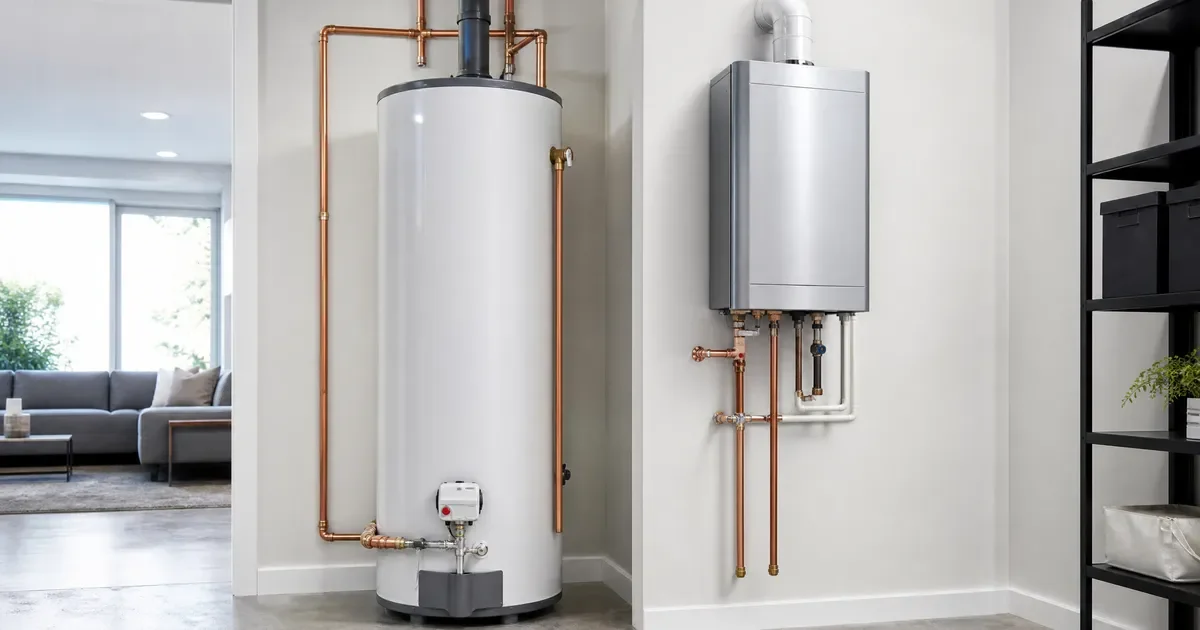
It is a question that comes up whenever a water heater reaches the end of its life, and it is a genuinely good one. Should you buy a tankless water heater or a hot water tank next? Both systems heat your water effectively. Both have clear advantages. And both have limitations that matter depending on your household size, budget, and long-term plans for the property.
Making the right call saves Plombeo customers money, prevents frustration, and ensures your home has reliable hot water for years to come. This guide gives a comparison for both honestly so you can make an informed decision before your next installation.
How a Traditional Hot Water Tank Works
A conventional hot water tank, also known as a storage water heater, keeps a large volume of water, typically between 150 and 300 litres for residential use, heated to a preset temperature at all times. Water enters at the base, heats as it rises through the tank, and is distributed to fixtures throughout your home as needed.
The system is straightforward. When you open the hot tap, already-heated water flows immediately. Once the tank empties, it takes time to recover, typically 30 to 60 minutes depending on the unit size and energy source.
How a Tankless Water Heater Works
A tankless water heater, also called an on-demand water heater, has no storage tank. When you open a hot water tap, cold water passes over a heat exchanger inside the unit, which heats it rapidly and delivers it to the fixture. The unit only activates when hot water is actually requested, which means it uses no energy maintaining a standing volume of hot water.
In the tankless water heater vs hot water tank comparison, this fundamental difference in operation is what drives most of the advantages and trade-offs that follow.
Cost: Upfront and Long-Term
A traditional hot water tank costs less to purchase and install. For many homeowners, especially in older properties already set up for a conventional unit, the upfront savings are significant. A tankless system costs considerably more to buy, and the installation is more complex, often requiring upgraded gas lines or electrical circuits depending on the model.
Long-term, however, the tankless water heater vs hot water tank picture shifts. Because tankless units only heat water on demand rather than maintaining a constantly heated tank, they use less energy over time. According to Natural Resources Canada, water heating typically accounts for around 20 percent of a household’s energy use, making efficiency gains from a tankless unit meaningful over its lifespan.
Lifespan
This is one of the clearest advantages in the tankless water heater vs hot water tank debate for the tankless option. Conventional tank water heaters typically last between 8 and 12 years. Tankless units are designed to last 20 years or more with proper maintenance. The higher upfront cost of a tankless system is spread across a much longer service life.
Performance and Hot Water Supply
A hot water tank delivers immediate hot water because the water is already heated and waiting. A tankless unit has a slight initial delay of a few seconds as water passes over the heat exchanger. However, a tankless system never runs out of hot water. It simply heats on demand. A tank can be depleted if multiple people shower back to back or if several appliances draw hot water simultaneously.
For larger households with high simultaneous demand, a single tankless unit may struggle to keep up. Properly sizing a tankless unit for your household is critical, and a licensed plumber should assess your demand before installation.
Which One Is Right for You?
If upfront cost and simplicity are your priorities and your household has moderate hot water needs, a conventional tank is a practical, reliable choice. If long-term efficiency, space savings, and an unlimited hot water supply matter more to you, a tankless system is the stronger long-term investment.
Either way, the decision deserves a professional assessment of your home’s infrastructure and usage patterns. If you are noticing warning signs that your current system is failing, our guide on signs your water heater is going out can help you decide when replacement is necessary. For broader plumbing concerns beyond water heaters, our plumbing services in Montreal and plumbing renovation services in Montreal cover complete home plumbing assessments and upgrades.
Contact Plombeo for expert plumbing services and water heater installation across Quebec. Our certified team will help you navigate the tankless water heater vs hot water tank decision with clarity and install your chosen system to the highest standard.