

Blogs
Backwater Valve vs Sump Pump: What’s the Difference?

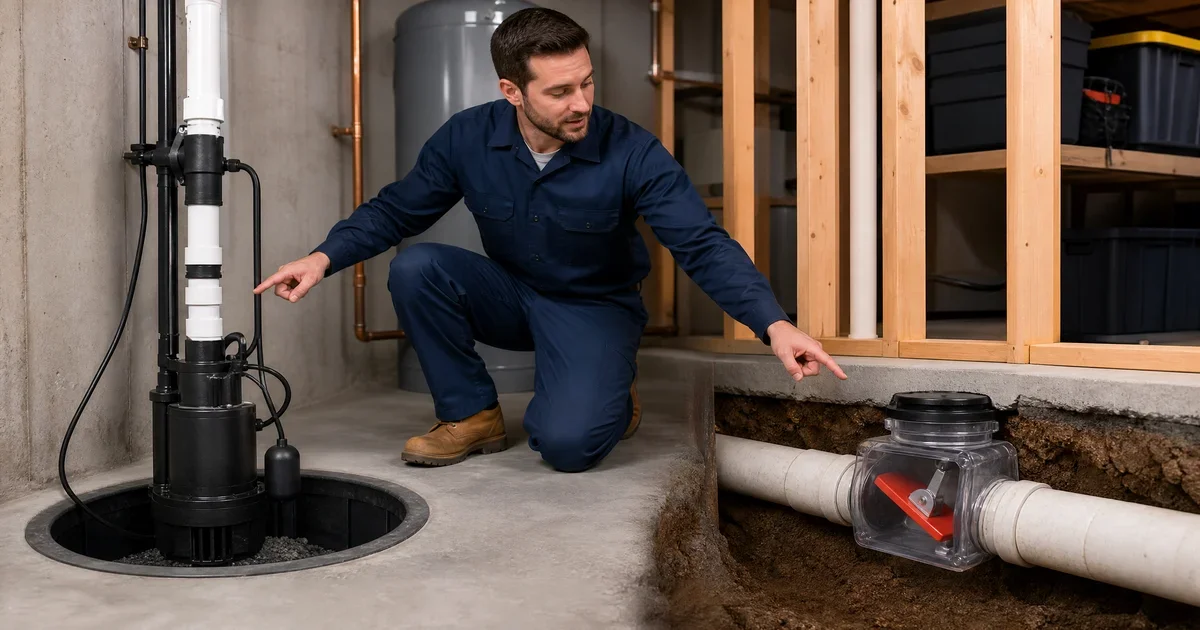
Basement flooding is one of the most stressful and expensive problems a homeowner can face. Two devices come up repeatedly: the backwater valve and the sump pump. They both work to keep water out of your basement, but they address entirely different threats. Understanding the difference between a backwater valve and a sump pump is essential before deciding which one your property needs.
What Is A Sump Pump?
A sump pump is an active, electrically powered device installed in a sump basin at the lowest point of your basement. Groundwater that seeps into the basin is automatically pumped away from your home. Sump pumps are most effective for homes with a high water table or a history of groundwater seepage during heavy rainfall.
What Is A Backwater Valve?
A backwater valve is a passive device installed in your main sewer line. It contains a flap that allows wastewater to flow out normally but closes when sewer pressure reverses, preventing municipal sewage from backing up into your home through floor drains and toilets.
The Key Difference
A sump pump manages groundwater entering from below. A backwater valve protects against sewage entering from the municipal system through your drain lines. These are separate water intrusion paths, and one device cannot substitute for the other.
Do You Need One Or Both?
If your neighbourhood has experienced municipal sewer backups, a backwater valve is essential. If your property has groundwater seeping through your foundation after rain, a sump pump is the right solution. If both conditions apply, installing both provides comprehensive protection.
Plombeo helps homeowners across Montreal with plumbing services including backwater valve installation, sump pump assessment, and flood protection planning.