
Blogs
How to Identify Kitec Plumbing

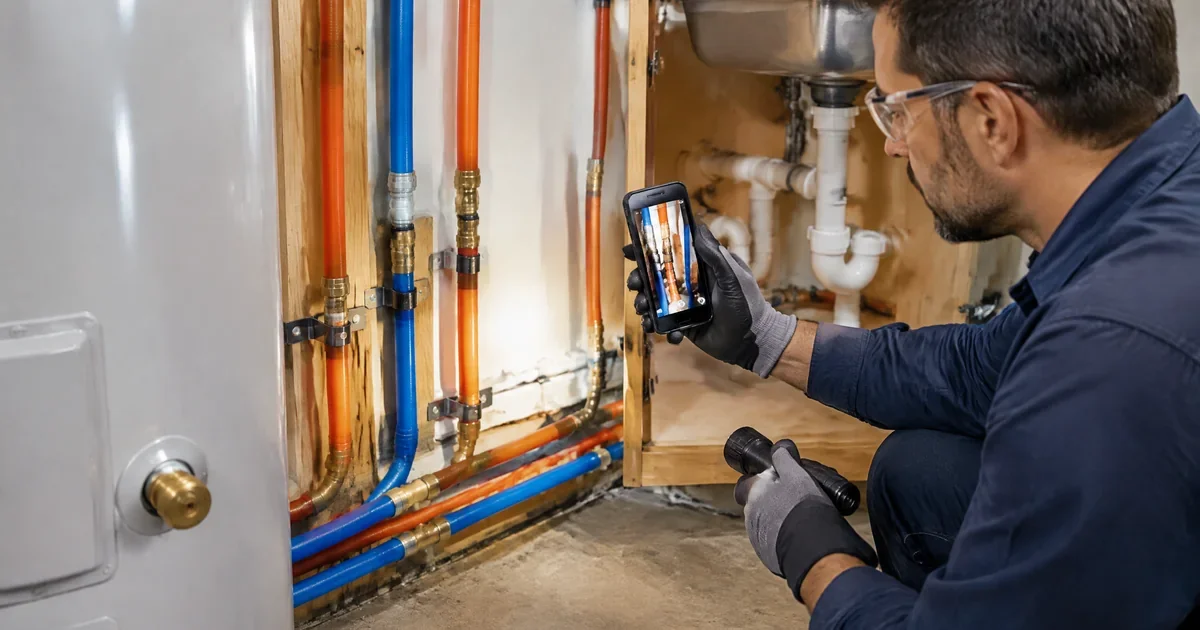
If your home was built or significantly renovated between 1995 and 2007, there is a real possibility that Kitec plumbing is installed in your walls. This flexible pipe system was marketed as an economical and corrosion-resistant alternative to copper, and it was widely used across Canada and the United States during that period. The problem is that it was recalled in 2005 due to an accelerated corrosion rate that causes premature pipe failure, and many homes still have it without the owners knowing.
Knowing how to identify Kitec plumbing is not just a home maintenance question. It has real consequences for property safety, real estate disclosure obligations in Quebec and across Canada, and your insurance coverage. Contact us if you suspect your home might contain Kitec piping, and this guide will help you know exactly what to look for before you do.
What Is Kitec Plumbing?
Kitec plumbing is a system that uses flexible aluminum pipe with plastic inner and outer layers, connected by brass fittings. It was sold under at least nine brand names, including Kitec, Kitec XPA, PlumbBetter, WarmRite, IPEX AQUA, AmbioComfort, KERR Controls, XPA, and Plomberie Ameliee. Despite manufacturer claims of corrosion resistance, the fittings corrode internally at a rate far faster than expected, leading to leaks and, in some cases, complete pipe failure.
The Fastest Way to Identify Kitec Plumbing
The most reliable visual method for identifying Kitec plumbing is colour. Cold water pipes in a Kitec system are bright blue, while hot water pipes are orange. This colour coding was standard across all Kitec product lines, making it relatively easy to distinguish from copper pipes, which are copper-toned, or modern PEX pipes, which come in red, blue, and white but have a noticeably different texture and connector type.
Look for the ASTM 1281 marking stamped on the pipe surface. This is the product standard designation used on all Kitec products and is one of the clearest confirmation markers when the pipe colour alone does not provide certainty. Pipes may also be marked with one of the brand names listed above.
Where to Look
The best places to identify Kitec plumbing in your home are areas where pipes are exposed or accessible. Start near your water heater and in your mechanical room. This is where supply lines connect to or exit your walls and where multiple runs of pipe are visible simultaneously. The fittings near the water heater connections are particularly important because this is where corrosion and failure tend to appear first.
Under kitchen and bathroom sinks is another location where the pipe or fitting exits the wall and is visible without any dismantling. Utility rooms, laundry connections, and any area where an inspection panel provides access to in-wall plumbing are all worth checking. Because failures often begin as moisture problems, professional water leak repair services can verify whether your supply lines have started to weaken.
Signs That Kitec Plumbing Is Starting to Fail
Even if your pipes have not failed yet, Kitec plumbing can show early warning signs of deterioration. The first is a white or chalky mineral residue building up around the outside of the brass fittings. This crust is a sign that the fittings are corroding internally and that the pipe wall has begun to degrade around the connection point.
The second visible sign is the pipes beginning to darken, bulge, or develop a soft or irregular texture. These physical changes indicate that the structural integrity of the pipe wall is compromised and that failure is approaching. Both of these signs appear most frequently near the hot water tank, where elevated temperatures accelerate the deterioration process. A slow drip is often the first proof, so our guide on how to find a water leak in your house can help you locate the source.
What to Do If You Find Kitec Plumbing
If you discover Kitec plumbing in your home, the recommended course of action is full replacement. There is no patch or repair method that addresses the systemic corrosion problem in the fittings. Kitec must be replaced with copper or modern PEX-A piping to eliminate the risk of premature failure. The scope and cost of replacement depend on the size of your home and how much of the system is Kitec, as most lines run behind walls and require access work alongside the pipe replacement itself. Our plumbing renovation services handle whole-system repiping projects from start to finish.
From a real estate perspective, Kitec plumbing is a material disclosure requirement in Quebec. If you are selling a home with Kitec plumbing installed, your realtor is required to disclose its presence to potential buyers. Accounting for it early protects you from liability and gives buyers the information they need.
Get Your System Assessed by a Professional
If you are not sure whether your home has Kitec plumbing, or if you have found it and want to understand your options, the next step is a professional assessment. Contact Plombeo for expert plumbing services across Quebec. Our certified team assesses your system, identifies the extent of any Kitec installation, and provides a structured replacement plan that protects your home long-term.