

Blogs
How to Fix a Toilet Leaking Around Base

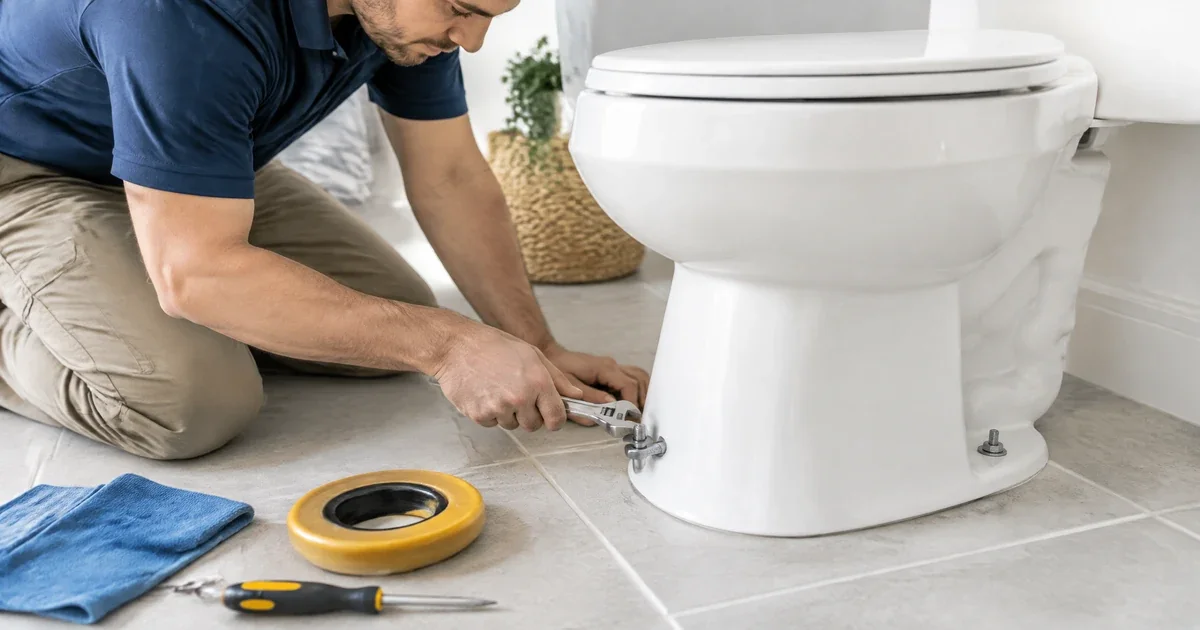
You notice a small puddle at the foot of your toilet. At first it seems minor. But a toilet leaking around the base is never something to leave alone. That moisture can seep into your floor, damage the subfloor underneath, and create conditions for mould long before you see any obvious sign. The earlier you act, the simpler and less costly the fix.
The reassuring thing is that most cases of a toilet leaking around the base come down to a handful of common causes, and several of them can be handled with basic tools and a bit of patience. This guide walks you through what is causing it, how to fix it step by step, and when calling a licensed plumber is the smarter move. A small leak that gets ignored can quickly become a far more expensive repair.
Why Is Your Toilet Leaking Around the Base?
Before you reach for a wrench, it helps to understand what is actually failing. A toilet leaking around the base is usually caused by one of three things: loose mounting bolts, a failed wax ring, or a cracked toilet base. Each has its own set of symptoms and requires a slightly different approach.
Loose Tee Bolts
The toilet is held to the floor by two tee bolts, also called closet bolts, one on each side of the base. Over time, these can loosen, which allows the toilet to shift slightly and break the seal between the wax ring and the drain flange. When water escapes during a flush, it pools at the base.
Start here before doing anything else. Remove the plastic caps at the base of the toilet on each side. Use a wrench to tighten each bolt, alternating sides to apply even pressure. Do not overtighten, since porcelain cracks under too much force. Once tightened, dry the floor completely, flush several times, and wait 15 minutes. If no water appears, the bolts were the issue and you are done.
A Failed Wax Ring
If tightening the bolts does not solve the problem, the wax ring is the most likely culprit. The wax ring is the soft, circular seal positioned between the bottom of the toilet and the drain flange in the floor. Its job is to create a watertight seal every time you flush. When it deteriorates, compresses unevenly, or is disturbed by toilet movement, that seal fails and water escapes at the base.
Replacing the wax ring requires removing the toilet entirely. Shut off the water supply valve behind the toilet and flush to empty the tank and bowl. Use a plunger or pour a bucket of water steadily into the bowl to force out any remaining water. Disconnect the supply line from the tank. Loosen and remove the tee bolts, then rock the toilet gently to break the old seal before lifting it clear. Stuff a rag into the exposed drain opening to block sewer gas from entering the room.
Use a putty knife to scrape every trace of the old wax from both the drain flange and the toilet horn. Install the new wax ring over the flange and press it gently into position. Slide the tee bolts into the flange slots. Lower the toilet carefully, aligning the base holes with the bolts, and press down firmly with your body weight to compress the wax into a proper seal. Reinstall the washers and nuts, alternating sides and tightening gradually. Reconnect the supply line, turn the water back on, and test with several flushes.
A Cracked Toilet Base
If water appears around the base only during a flush and no wax ring or bolt issue can be found, the toilet itself may be cracked. Even a hairline fracture in the porcelain base can allow water to escape under pressure. Run your hand carefully around the entire base while the toilet is dry and look closely for any discolouration, fine lines, or rough texture that breaks the smooth surface. A cracked toilet cannot be repaired and must be replaced entirely. If you are not sure where the moisture is coming from, our water leak repair services can help you confirm the source before you replace anything.
Condensation vs. an Actual Leak
Not all water at the base of a toilet is a leak in the traditional sense. In humid conditions, condensation can form on the outside of the cold tank and drip down to pool at the floor around the base. To tell the difference, dry the area completely, place paper towels around the base, and watch carefully during a flush. If the moisture appears only after flushing, it is a genuine leak. If it appears gradually without flushing, condensation is likely the cause. For more ways to trace the source of the problem, read our guide on how to find a water leak in your house.
When to Stop and Call a Professional
If you have replaced the wax ring and the toilet is still leaking around the base, the drain flange itself may be damaged, corroded, or sitting at the wrong height. A flange that sits too low prevents the wax ring from sealing properly regardless of how new it is. Flange repair or replacement is potentially hazardous to get wrong and should be handled with the right tools and technique. Reach out to us today to have the leak assessed by a certified technician who can stop the problem at its source.
Contact Plombeo for professional plumbing services across Quebec. Our certified team diagnoses toilet leaks around the base accurately and completes repairs that hold. Do not let a small leak become a costly subfloor repair.