

Blogs
Why Are My Pipes Knocking When the Toilet Is Flushed

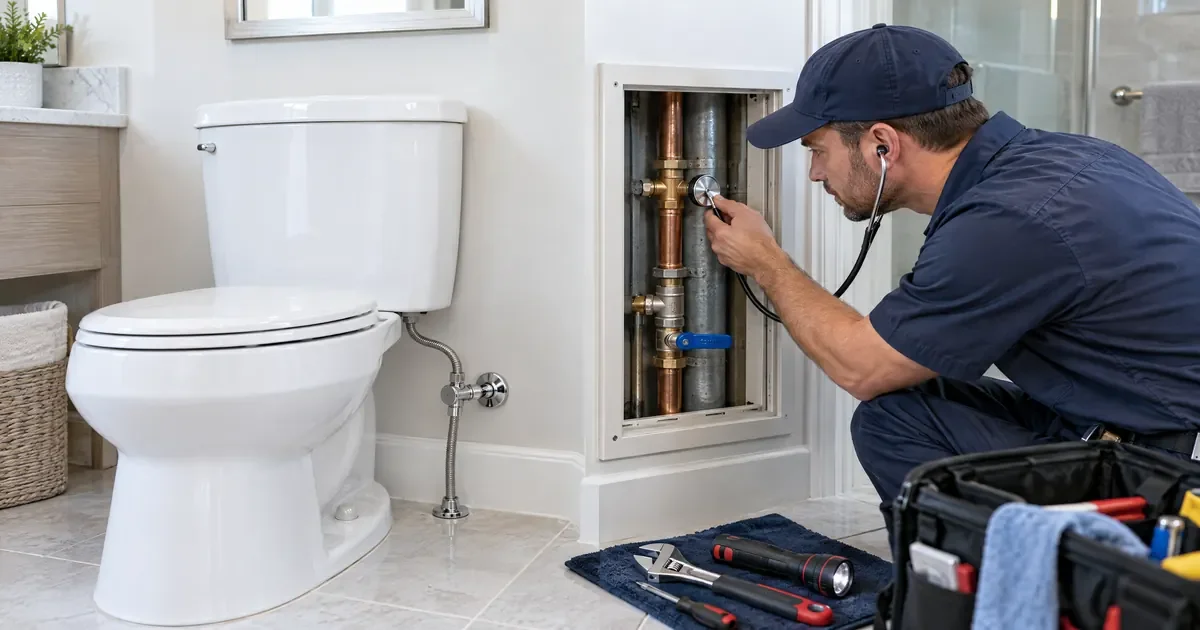
You flush the toilet and the pipes start knocking. It might sound like a distant thud, a sharp bang, or a rapid series of taps running through the walls. The first time it happens, you might dismiss it. But once you notice it, it becomes hard to ignore. You begin to question why your pipes are knocking when the toilet is flushed; that sound is not random. It is your plumbing system reacting to a specific mechanical condition, and understanding what is causing it is the first step toward making it stop.
The good news is that most causes of pipes knocking are diagnosable and fixable. Some are simple enough to address yourself. Others require a licensed plumber with the right tools. This guide covers the most common causes, what each sounds like, and what to do about it.
Water Hammer: The Most Common Cause
Water hammer is the leading reason pipes knock. When the toilet’s fill valve shuts off abruptly after the tank refills, it suddenly stops a column of moving water. That water has momentum, and when it is stopped without a cushion to absorb the pressure, it creates a hydraulic shock wave that travels through the pipe and sounds exactly like a hammer hitting metal inside your wall.
Modern homes are built with water hammer arrestors, which are spring-loaded devices installed directly on supply lines to absorb that shock before it reaches the pipe wall. Older homes built before approximately 1960 used air chambers instead, which are vertical pipe extensions that trap a column of air to cushion the impact. Over time, water fills those air chambers, and the cushion disappears. If your home is older and you are hearing a loud single bang every time you flush, a waterlogged air chamber or an absent arrestor is the most likely cause.
High Water Pressure
Water pressure that exceeds the recommended residential range of 275 to 550 kilopascals (approximately 40 to 80 PSI) forces water through your pipes at a speed and force they were not designed to handle consistently. When a valve closes at that pressure, the shock is significantly stronger. If your pipes knock when the toilet is flushed with a persistent tapping or vibrating sound rather than a single hard bang, high pressure is worth investigating.
You can test your pressure using an inexpensive gauge attached to a hose bib. If the reading exceeds 550 kPa, a pressure-reducing valve, or PRV, is the solution. If one is already installed, it may need adjustment or replacement. A PRV brings pressure into the safe range and reduces the force of every valve closure in the system, including your toilet’s fill valve.
Loose Supply Pipes
When supply pipes are not properly secured to the wall studs or framing around them, water flow causes them to vibrate. As the toilet fills and the fill valve shuts off, that vibration can cause the pipe to knock against the wall, another pipe, or its mounting bracket. The sound this creates is typically more of a rattle or repeated knocking rather than a single sharp bang.
Pipes can come loose over years of thermal expansion and contraction as water temperature changes. If the accessible supply line leading to your toilet feels or sounds like it moves when you flush, a plumber can assess whether the securing brackets are correctly placed and whether the pipe needs to be refastened.
Sediment in the Water Heater
This one surprises many homeowners. If the knocking seems to come from somewhere near the water heater rather than at the toilet itself, sediment buildup inside the tank may be the real source. As sediment accumulates at the bottom of the heater, the heating element creates steam bubbles that are trapped beneath it. Those bubbles escape and cause a knocking or popping sound that can carry through connected pipes. Flushing the water heater annually prevents this buildup and often resolves this type of noise entirely.
Are Knocking Pipes a Serious Problem?
Not always, but you should not ignore them. Occasional, mild pipe knocking when the toilet is flushed is usually a nuisance more than a hazard. However, repeated hydraulic shock from water hammer, particularly at high pressure, places real stress on pipe joints and fittings over time. In older systems or connections that are already under strain, it can contribute to joint fatigue and eventual leaks. The longer a water hammer condition goes unaddressed, the greater the risk of damage accumulating silently inside your walls.
Fixing the Knocking for Good
The right fix depends on the cause. A professional plumber can install a water hammer arrestor at the toilet’s supply line, adjust or replace your PRV if pressure is too high, re-secure loose supply pipes, flush sediment from your water heater, or refill air chambers that have waterlogged over time. A full system pressure assessment often reveals whether the condition is isolated to the toilet or affecting the entire home’s plumbing.
If you’re wondering why your pipes are knocking when the toilet is flushed and are not sure where to start, contact Plombeo for professional plumbing services across Québec. Our certified plumbers diagnose pipe noise accurately and fix it at the source.