

Blogs
Why Water Coming Up Through Basement Floor Drain After Heavy Rain?

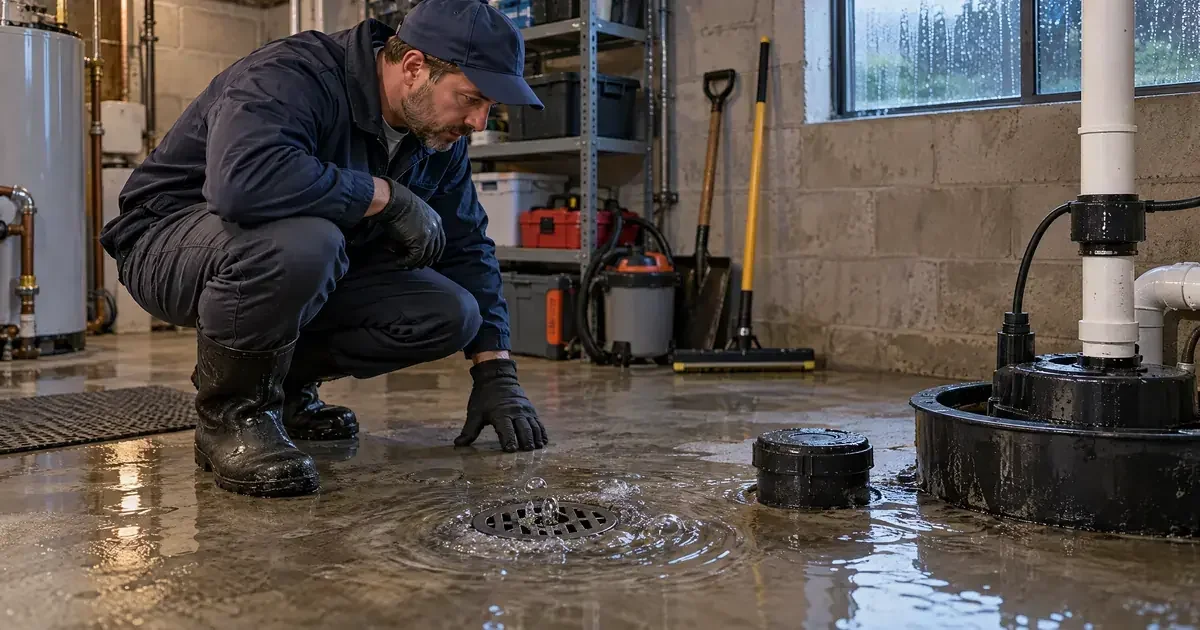
You head down to the basement after a heavy rainstorm, and the floor drain is the last thing on your mind, until you notice water rising through it. Water coming up through the basement floor drain after heavy rain is not just a mess to clean up. It is a signal that something in your drainage system is under more pressure than it can handle. And if it has happened once, conditions are already in place for it to happen again.
Understanding why water keeps coming up through a floor drain in the basement after rain helps you take the right action immediately and put in place the protection that prevents the next occurrence. This guide covers the causes, what to do in the moment, and how to keep your basement dry when the next storm hits.
Why the Basement Floor Drain Is Always the First Place You Notice It
Your basement floor drain sits at the lowest point of your home’s entire plumbing system. Every fixture above it drains downward and eventually connects to the same main sewer line. When that main line cannot move water forward fast enough, whether due to municipal system overload, a blockage, or structural pipe damage, the pressure reverses and water follows gravity back to the lowest available exit: your basement floor drain. That is why water comes up through the basement floor rather than appearing at a sink or toilet upstairs.
The Most Common Causes
The most frequent cause during heavy rain is municipal sewer system overload. In Québec and across Canada, some municipalities rely on combined sewer systems that carry both stormwater and sanitary sewage in the same pipes. When a major rainstorm delivers more volume than those pipes can move, the pressure builds, and forces water backward into connected homes through the lowest drain point. This is especially relevant for older urban areas where sewer separation has not yet been completed.
A blocked or damaged sewer lateral is the second major cause. The sewer lateral is the pipe that carries all your home’s wastewater from the property line to the municipal sewer main in the street. Tree root intrusion, grease accumulation, pipe sagging, or a partially collapsed section all reduce this pipe’s capacity to handle the flow during rain events. What moves freely in dry conditions becomes a bottleneck when storm flows increase. A camera inspection reveals these conditions directly.
A failed or overwhelmed sump pump is a third cause. If your home has a sump pit to collect groundwater around the foundation, a pump failure means that groundwater rises until it finds the nearest exit, often the basement floor drain. Battery backup sump pumps are the most effective protection against failure during storms when power outages are most likely to occur.
Immediate Steps When You Discover the Backup
When water is coming up through your basement floor drain after heavy rain, your first concern is safety. Do not enter a flooded basement if there are electrical outlets, panels, or appliances near the water level. Shut off power to the basement at the main breaker if you can do so safely without entering the water. If the water appears dark, cloudy, or carries an odour, treat it as potentially sewage-contaminated and avoid direct skin contact.
Shut off the main water supply to prevent additional flow into the system, and stop using any fixtures in the house until the backup clears. Once the storm passes and the sewer system pressure normalizes, the drain will typically stop surging. Then begin cleanup with proper protective equipment, removing any wet materials that contacted sewage water, as these cannot be sanitized and must be discarded.
How to Prevent It From Happening Again
The most effective long-term protection against water coming up through the basement floor drain after heavy rain is the installation of a backwater valve. This is a device installed directly in your main sewer line that allows wastewater to flow outward normally but contains a flap that closes automatically when flow tries to reverse. When the municipal system surcharges during a storm, the valve seals the line and prevents sewage from entering your home. Many municipalities in Québec offer rebate programs for backwater valve installation.
Annual camera inspection of your sewer lateral catches tree root intrusion, pipe sagging, and blockages before they compound storm flow problems. Hydro-jetting to clear the line removes accumulated debris and grease coating that reduces pipe capacity. Sump pump testing and battery backup installation round out a comprehensive protection approach for any basement vulnerable to rain-related drainage surges.
Get the Right Assessment Before the Next Storm
If water has come up through your basement floor drain after heavy rain, do not wait for the next storm to confirm the problem. Contact Plombeo for professional plumbing services including sewer camera inspection, backwater valve installation, and sump pump assessment across Québec. Our certified team identifies the exact vulnerability and protects your basement from the next heavy rain.